

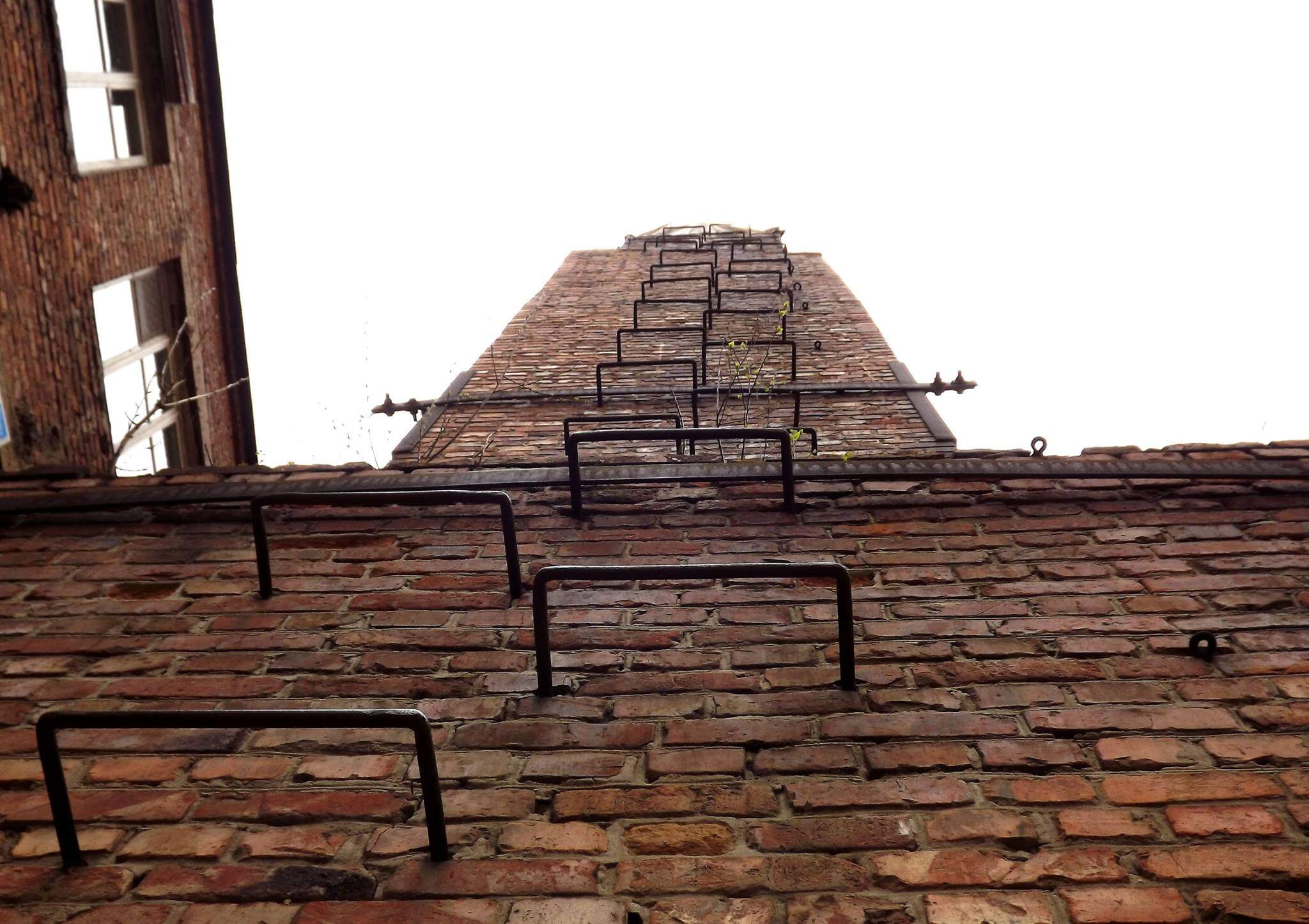
Restoration: Addressing Challenges
“Humanity increasingly understands the universal value of monuments, viewing them as common heritage, recognizing the responsibility towards future generations for their preservation, and considering it an obligation to pass on this heritage in all its authentic richness.”
© International Charter for the Conservation and Restoration of Monuments and Sites. Venice, 1964.
As I sat down to write this article, I found myself in a quandary trying to succinctly explain what “restoration” entails. With over a decade of experience as an architect-restorer, coupled with six years of education in this field, the concept of restoration as a process, as a relationship with a building or object, has become ingrained in me. How can we convey the concept of restoration to others? Let’s try through questions and answers.
Firstly, what is restoration?
It involves specialized activities aimed at the rehabilitation of a building and its components through the implementation of specialized construction measures that have been scientifically justified and individually tailored for each specific building. These measures specialize in selecting construction technologies that do not conflict with the existing “body” of the building. Old and historic buildings can be likened to living organisms that, over time, have acquired their own characteristics and a kind of “medical history.” Such objects require a special approach considering their individuality, age, the construction era during which they were created, and the problems they have acquired.
Restoration is a complex set of works conducted on architectural/cultural/historical landmarks. It’s worth noting that in our country, restoration is a type of work applicable only to monuments (defined legislatively through lists and/or registries). Moreover, it is not permitted to conduct any other types of construction except for restoration – this provision is enshrined in the Law of Ukraine on the Protection of Cultural Heritage. The concept of restoration includes the following types of work: restoration repair, urgent emergency conservation work, restoration, rehabilitation, adaptation for modern use, anastylosis, conservation.
Secondly, why is restoration necessary?
To answer this question, we need to take a broader look at old and historic buildings. What do they represent? For specialists, they are unique objects with their own typology, and some even have unique typology unusual for our time. For non-specialists, they represent our history, people, past, our relatives, our development, culture, and the level of our ancestors’ mastery of construction technologies – after all, we’ve inherited not just simple huts, but complex, interesting, stylish, and beautiful buildings. What does their loss mean? It means, “There was nothing here, and neither were you!” Loss of our past, our roots. Thus, to maintain the connection between generations and eras, it is necessary to preserve the heritage of the past. The main goal of restoration is to prolong the life of a monument, old or historic building.
Understanding Restoration: A Multifaceted Approach
Restoration, through its specialized endeavors, offers a means to preserve the essence of time – a category challenging to define by physical properties alone but shaping the sensory and emotional perception of the physical world.
Immersing in Sensory Experience
Take, for instance, the Zagosprom District, a precinct shaped in the 1920s and 1930s, epitomizing interwar modernist architecture. Walking along its radial streets like Chichibabin, one may find themselves irked by the disorganization of sidewalks, the fragmented façades, and their weathered appearance. A sense of incongruity pervades the environment with its eclectic balconies, diverse window fillings, and varied ground-floor entrances. Amidst this, at the intersection of Chichibabin and Henri Barbusse, stands an old pharmacy, retaining authentic storefronts and original window fillings on the second floor. Here, a moment of harmony resonates faintly. Music, perhaps tango, wafts from somewhere unexpectedly, blending with the summer air thick with the scent of impending rain. Peering through the open windows, one may catch the aroma of paint, evoking memories of grandmothers and their tales of gathering around phonographs, venturing into neighboring courtyards or parks with their music. In such moments, one finds themselves transported into a time capsule, immersed in the ambiance of the past, with the presence of long-gone individuals palpable once more.
The Role of Authenticity in Restoration
What facilitates this journey? It encompasses myriad factors: light, scents, temperature, time, and surroundings. While the first four are individual and subject to circumstance, the fifth factor depends on the inhabitants, property owners, officials – the people. Authenticity, particularly the preservation of “native” original details, shapes the unique identity of a building and its environment. Authenticity acts as a genetic thread, connecting eras and generations.
Unraveling Stories Through Authenticity
Authenticity narrates tales of individuals embedded in every city detail. The thick red brick walls bear imprints of Semen Yakovlevich Tolkachev or the Yenkos, the most common stamps encountered in the city. The colored coatings of Metlahskaya tiles in the entrances and lavatories of old houses, now actively dismantled, speak of products from the renowned enterprise “Baron E. Bergengaym’s Partnership, Kharkov.” These tiles extend beyond Kharkov and Ukraine. Alternatively, they showcase the production of Bergengaym’s competitors – “Lenge and Dzevulsky in Slavyansk” (before the 1917 Revolution, Slavyansk was part of the Kharkov province). The firm had two factories, one in Slavyansk and another in Opoczno, Poland, which still operates today. Similarly, the monolithic reinforced concrete steps and the first monolithic reinforced concrete frame speak of innovative young architects and engineers like Ginzburg, Rzhepishevsky, and Roytenberg. These individuals began integrating concrete into Kharkov’s architectural fabric as early as the early 20th century (1901-1916). Collectively, these elements narrate the tale of an industrial, technological city, existing before the 1920s, rich in geological resources, and populated by individuals who shaped the city.
Restoration: An Intricate Process
Cultural heritage objects – monuments and landmark buildings – require a distinct approach in both design and construction procedures. These objects, encompassing architectural, cultural, and historical significance, demand project documentation and approval processes fundamentally different from conventional construction projects such as new constructions, repairs, or reconstructions. Our team boasts ample experience working with such specific objects (including local architectural and cultural monuments, national architectural monuments, and historical buildings equivalent to architectural monuments in Ukraine) in Germany. By entrusting us with your restoration project, repair and restoration works, urgent emergency and conservation works, or monument adaptation, you gain access to a comprehensive suite of necessary research, surveys, and scientifically sound project documentation compliant with all regulatory requirements.