

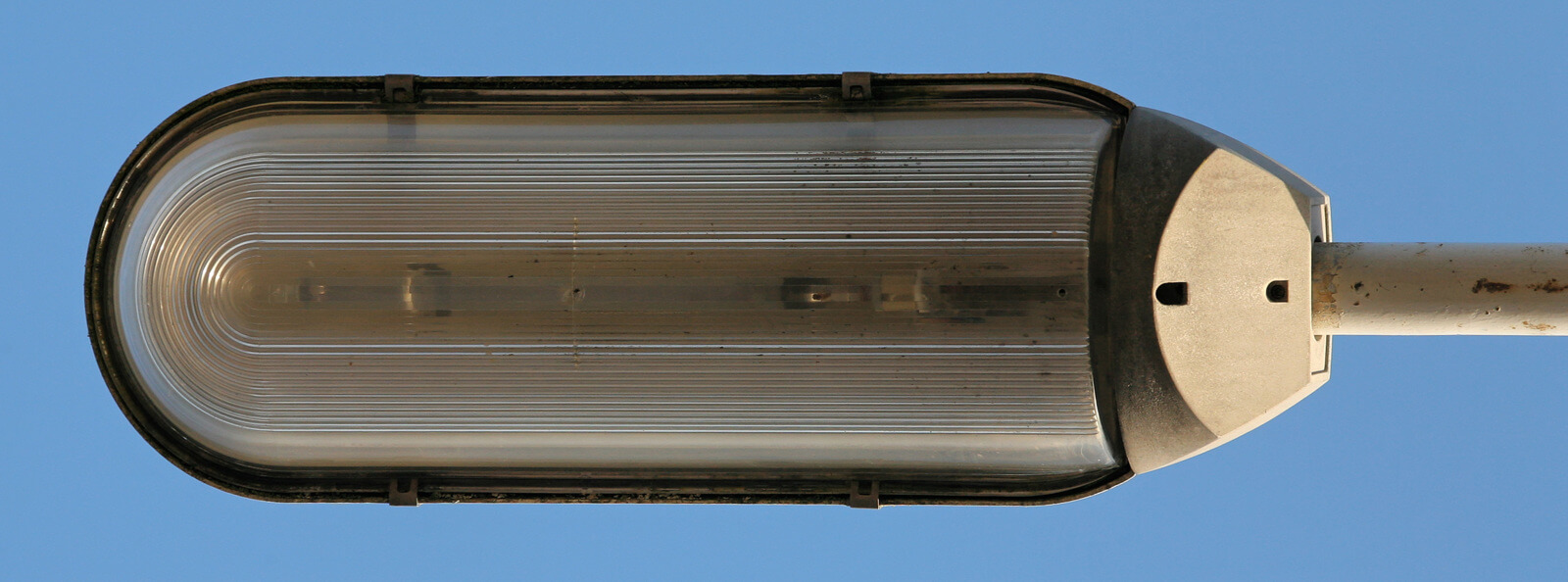
The Lamp
“Fiat lux” (Let there be light!)
From the distant gray antiquity, as humanity learned to extract and maintain fire, light became an integral part of life. More precisely, the ability to illuminate one’s dwelling, to extend one’s day into the darkness that followed.
Fast forward a few millennia. Ancient Greece and Rome – cradles of European civilization. Many historical sources attribute the emergence of lamps to this period – oil lamps. They had appeared earlier, but it was during this time that they became independent interior objects. Alongside the typical oil reservoir with a wick immersed in it, lamps were crafted in intricate forms endowed with symbolism, imbued with sacred and artistic meaning. They were made from ceramics, stone, metals, and their alloys, and were widespread across the world (within the concept of Oecumene, the inhabited world of that time – Eurasia, Africa, and India).
From its inception, light played a significant role both in everyday life and in religious rituals. This influenced the overall appearance of the lamp – from simple to elaborate, with ceremonial adornments.
Parallel to the technology of oil lighting, another form of illumination developed – candles. This source gained popularity during the times of Christianity and firmly established itself in its rituals – as panikadilo, horos, candle, candelabras.
A curious trend emerged – oil lamps were widely used, primarily by common people of modest means (particularly in European countries), while candle lighting, usually found in the settings of the affluent (a status symbol) and in churches. This distribution influenced the design and interpretation of lamps – in the former case, as a necessary and utilitarian object, and in the latter, as an art object, a symbol of luxury. Candelabras were crafted from metals and their alloys, stone, crystal. The appearance of candelabras – as items of interior decoration – was heavily influenced by ancient symbolism mixed with Christian beliefs. Light was always endowed with supernatural power and associated with a divine origin. In the times of Ancient Greece and Rome, the morning star was called Lucifer (known today to many as the planet Venus, observable during the morning and evening star), which literally translates as the bearer of light. Later, in Christian texts, the name of the star was transformed into the name of a fallen angel. Thus, candles held entities with wings, bearing light, as was prescribed by ancient beliefs, but without their own name. Only in the French language has the etymology of the word been preserved, which goes back to antiquity and reminds us of the original source – lustre (to illuminate, to shine).
Later, the designs of candelabras and chandeliers became more complex, with increasingly decorative details – crystal lampshades, lampshades.
This situation persisted until 1853, when in Borislav, in Lviv region, local pharmacists Jan Zeg and Ignat Lukasevich invented the gas lamp, which was showcased the following year at an international exhibition in Munich and was awarded a special lamp. After successful use of this lamp in Vienna, it began to spread first in Europe and became known as the Viennese lamp. The invention was sold to industrialist Rudolf Dietmar, who established the production of these lamps (on flea markets in Western and Eastern Ukraine, and sometimes further east, you can still find a gas lamp with the Dietmar stamp on the valve).
Later, this lamp appeared in the United States and, after some modification, went into mass production and returned to Europe, but under the name – American lamp. The gas lamp, unlike its predecessors, enjoyed demand both among the affluent and the less affluent segments of the population, but nevertheless, there remained a distinction between the richly decorated lamps for the upper class and the asceticism and practicality of devices for modest bourgeoisie.
Meanwhile, as the gas lamp changed names and traveled from Europe to America and back, Thomas Edison in 1879 invented the incandescent electric lamp. This marked a new stage in the evolution of the lamp, as an indispensable object of utility for any person, and a new philosophy of lighting device design. With the advent of new lighting technology, the appearance changed – lampshades and shades became smaller, options for external appearance became more diverse. The quality of lighting improved, and the construction of the lamp also improved due to hinges on the lamp base.
The next revolutionary change occurred in 1930, when mechanic George CorvoDain invented an element of the lamp – small springs that allowed the lamp to assume the most suitable shape and fix it.
The pages of the lamp’s evolution are turning faster and faster, along with progress and the emergence of new technologies. Cold filament lamps, LEDs appeared. The emergence of new power and lighting sources entails a change in the appearance of the lamp – it becomes more technological in design. The materials from which it is made vary – cheap and expensive, fragile and sturdy. Light can be sharp or soft. In appearance, it becomes more democratic.
It so happened that throughout its history, the lamp has always had two functions – to illuminate the space of the room and to illuminate its owner, demonstrating his tastes, preferences, and who he is, thus becoming not just an element of interior decoration, but a symbol.